Maargadarshi
35%
Numeracy
Gains
25%
Growth in
21st-century skills
28%
Mastery
Gains
10,500
students across
38
schools in Anekal
10,500
students
across
38
schools in
Anekal
Reimagining Schools from Within
Maargadarshi, meaning ‘The Guide’ works with a network of schools to demonstrate student agency in practice. Through deep engagement with students, teachers, and communities, it creates learning environments where student voice and leadership thrive. As Involve’s living laboratory, it experiments and refines new approaches, generating insights that inform our work and bridge the gap between educational ideas and real-world implementation.


Building Agency at Every Level:
Classroom Level
Embed peer learning, collaboration, and student-led practices in everyday teaching.
School Level
Create systems for student leadership, voice, feedback, and shared decision making.
Leader Level
Support teachers and school leaders through coaching, practical tools, and reflection.
Together, they create living models of student agency in practice:
Together, they create living models of student agency in practice:
Students actively participate in learning, peer teaching and collaboration, and every student has a defined role.
Students' voices are visible and acted upon, leadership is disturbed across students and participation becomes part of daily functioning.
We create clear proof points for the system, scalable learning models and documented evidence of impact across both academic and non academic outcomes.
We bring this to life on the ground through dual school models – Flagship and Innovation Schools
Testimonials

During a math class, Aditya, a student math leader, was helping first and second graders with subtraction. When Milana struggled to understand, his co – leader stepped in to help by using ice cream sticks to explain the concept. This hands on, student – led approach worked perfectly. Milana solved sums on her own, finding both joy and pride in her learning.
GHPS Koppa Gate · Anekal Block, Karnataka
I used to be afraid of speaking in front of people. But now I feel confident. The program pushed me to try — and I did it!
Student Leader · Maargadarshi Program
The problem I identified is wastage of water. I created awareness in my community to fix leaky taps and not throw garbage in water bodies so that we can have fresh water to drink.
Jeevan M., G.H.P.S. Konasandra
Activities and Interventions
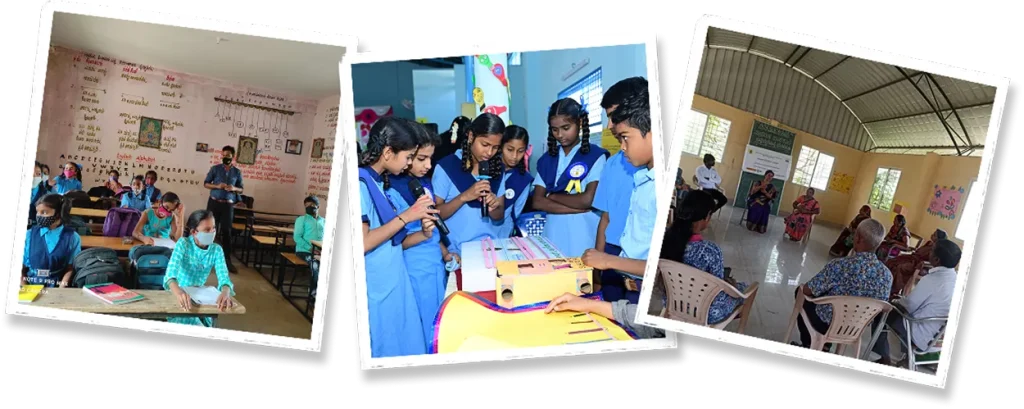
Every program builds toward agency. From the classroom to the community each intervention expands the space where a child can lead.
In this model, students are facilitators and learners. Seniors become guides for juniors, and they teach each other. Implemented across LPS and HPS, it completely changes the classroom because the students take the lead.
Students participate in the SDMC meetings and they bring up issues such as safety, facilities in the schools, and mid-day meals. This gives them an opportunity to contribute to discussions about their daily life.
This is like a council run by children that bridges the school with the community. Students participate in local governance by presenting their concerns and solutions to the local authorities. First piloted in Anekal, we have seen great involvement of the community.
Students participate in the SDMC meetings and they bring up issues such as safety, facilities in the schools, and mid-day meals. This gives them an opportunity to contribute to discussions about their daily life.
What if the President doesn’t listen?
What if she thinks I am just a child?
How a holiday homework project led Ayaan to address water scarcity in his colony.
From struggling to follow instructions, to leading her peers with discipline and responsibility.
Discover how consistent peer support transformed Ananya into a confident student leader.
Milestones

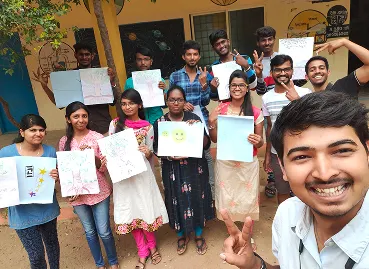
The Maargadarshi Sammelana was recognised by Zilla Panchayat CEO Lata Kumari (IAS) for demonstrating what student-led schools can look like in practice.
Flagship Schools: Demonstration at Depth
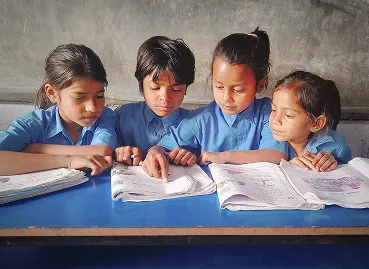
Flagship Schools are long-term partners where student agency is embedded into daily functioning. They demonstrate what is realistically possible within government school constraints serving as lighthouses for the system.
Innovation School: Rapid Prototyping & Learning
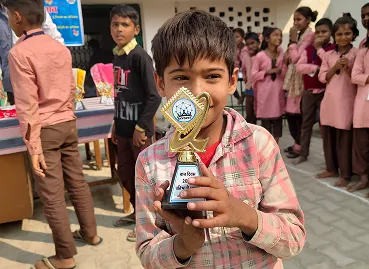
Innovation Schools are sites for experimenting with new ideas and approaches quickly. Here, we dive deeper into themes like Financial literacy, Climate change and more, through the lens of student agency and our Peer learning model. They provide diverse contexts to understand what adapts across different settings, fueling the learning that improves model school practice.
The Holiday Homework Project was meant to help students notice problems around them and think about their community beyond textbooks. But for Ayaan, it was personal. He had seen mornings in his colony turn chaotic over just a bucket of water. His mother planned each day around uncertainty. The bigger problem, however, was that people had begun normalising water scarcity instead of holding the panchayat accountable or perhaps they were simply tired of asking and not being heard.
The project gave Ayaan a reason to try anyway. Generally, students follow different stages to complete the holiday project, and writing to the panchayat is usually the final step. But Ayaan and his friend Sanjay chose to write directly to the Gram Panchayat President about the water crisis because they had lived through it for months, and the entire colony signed the letter. Still, they were children, and naturally felt scared as everything was turning into reality.
Ayaan asked his mother, “What if the President doesn’t listen? What if she thinks I am just a child?” His mother replied, “We are all being affected, including you. You care, and you cared enough to speak up and that’s what matters.” These words stayed with Ayaan and Sanjay. They not only submitted the letter to Panchayat President Indramma but also explained why it was important for them to raise the issue. It took follow-ups and time, but weeks later, regular water supply returned. What Ayaan and Sanjay showed is simple: if you don’t try, nothing changes. And age does not decide your role in society.
Ananya, who was a learner in the previous year, is now a confident student leader. Initially, she struggled to follow instructions, often resisted sitting with her leader, and found it difficult to accept guidance. However, her leader Jeevan consistently supported her through engaging activities, storytelling, and patient guidance. Over time, Ananya began to observe and appreciate his leadership, which inspired her to change her attitude and develop an interest in leading others.
Today, Ananya leads her group with discipline and responsibility. She encourages active participation, ensures her group works in a structured manner, and promotes respect for leadership among her peers.
This transformation matters because it shows how positive peer role models and consistent support can shape student behaviour, build leadership skills, and create confident, responsible learners.